Scented Candles vs. Reed Diffusers: Which Is Better for Retail Brands?
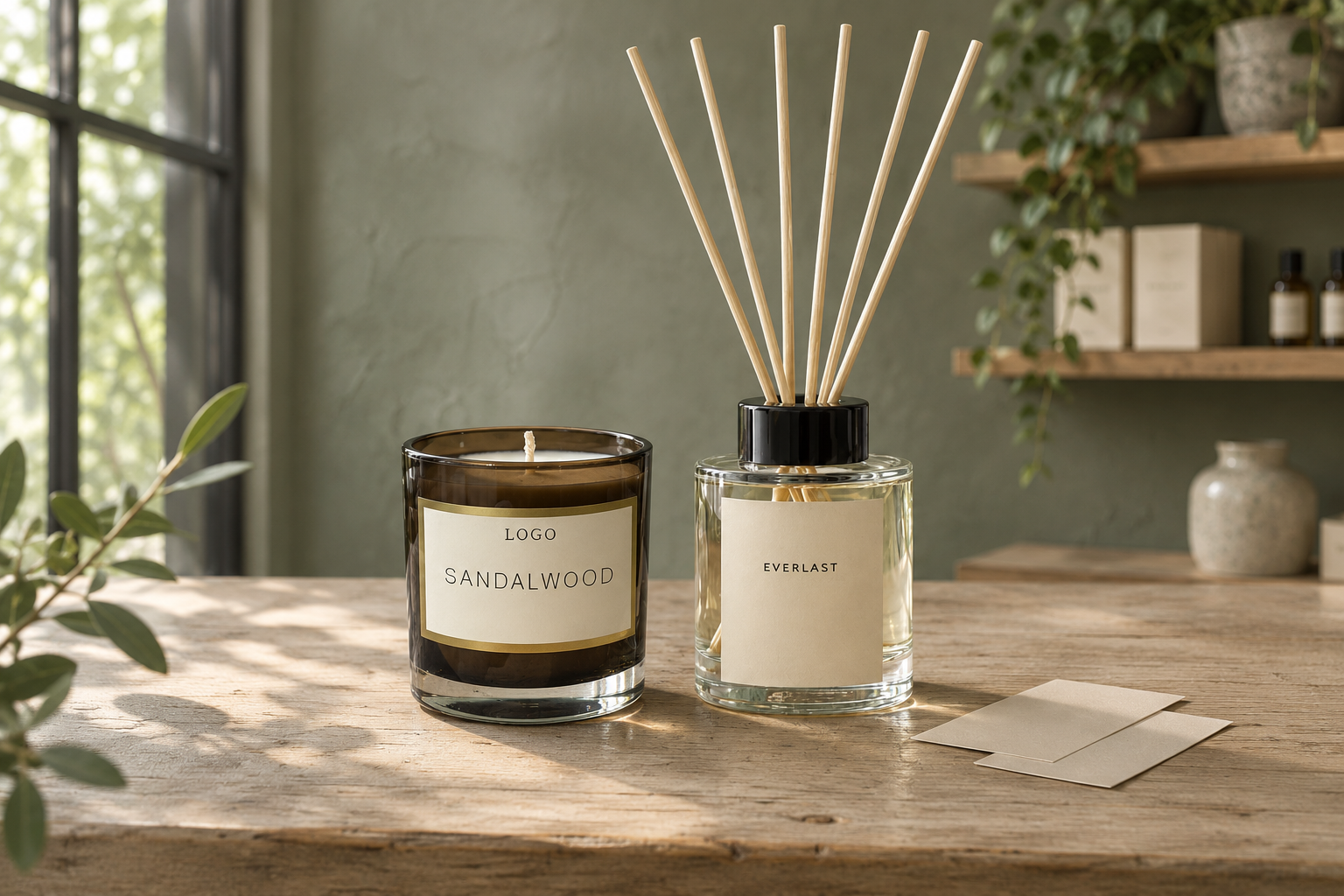
Choosing candles vs reed diffusers is a range-planning decision. A customer buying an evening gift may want a candle. Another customer may prefer fragrance without an open flame. Your collection needs to explain that difference clearly.
Neither format wins every comparison. The useful question is which product fits your shoppers, selling space and buying budget. This guide helps retail buyers compare the two before committing to a wholesale order.
1. Candles vs reed diffusers at a glance
| Buying question | Scented candles | Reed diffusers |
|---|---|---|
| What experience do they offer? | Fragrance, a visible flame and a deliberate use occasion | Fragrance released through reeds without lighting a wick |
| What does the customer manage? | Lighting, extinguishing and candle care | Bottle placement and care according to the product instructions |
| What needs checking in a sample? | Wax fill, wick, vessel and finished burn performance | Liquid, bottle closure, reeds and diffusion performance |
| What matters in packaging? | Glass protection, lid fit and candle instructions | Leak prevention, reed protection and liquid-specific labels |
| What can support a repeat purchase? | A preferred scent or familiar vessel | A preferred scent and a suitable replacement product |
Reeds draw liquid from the bottle and expose it to air. However, reed dimensions and the liquid formulation affect performance.1 A bottle that looks attractive is only one part of a diffuser specification.
For candles, supervise every burning session and follow the supplied care instructions. The National Candle Association advises keeping lit candles away from combustible materials and never leaving them unattended.2
2. Start with a shopping occasion
Ask why someone would pick up the product in your store. This often gives you a better starting point than selecting fragrances first.
For a small personal gift, a single candle may be easy to display and explain. The buyer can assess its vessel, fragrance and presentation together. A retail box can make the product easier to carry and give.
For everyday home fragrance, a reed diffuser gives customers a flame-free option. Explain where the bottle can sit securely and how to protect the surrounding surface. Flame-free does not mean spill-free or suitable for every household.
For a larger gift, a candle and diffuser can provide two ways to enjoy a fragrance direction. However, a pairing should have a reason to exist. Matching colors alone do not establish matching fragrance performance.
Browse our scented candles and reed diffusers as separate product categories before deciding which combinations to sample.
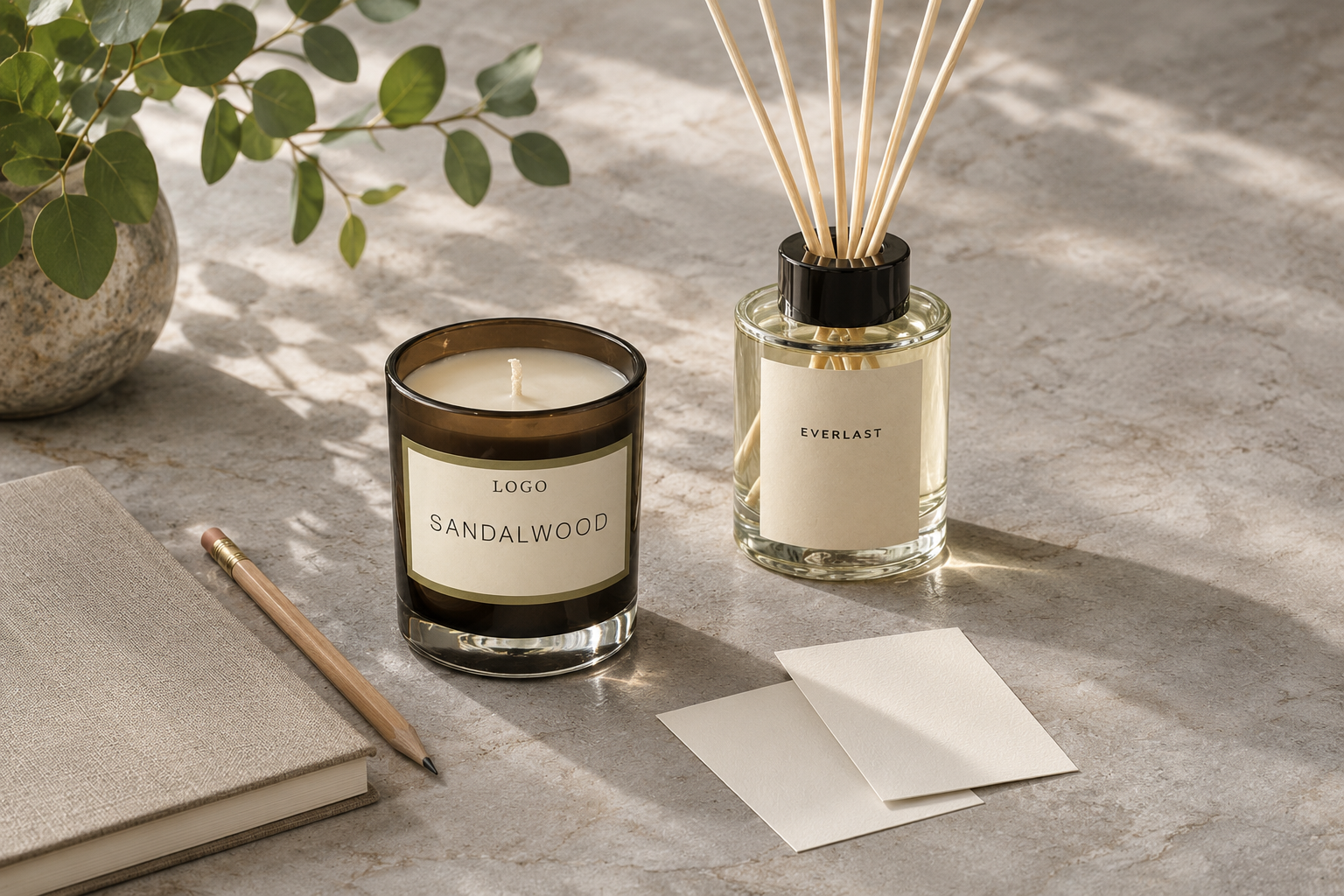
Editorial scene using Lumelle catalog products. Assess the candle and diffuser as separate finished specifications.
3. Compare complete costs
A candle price and a diffuser price tell you little unless you know what each includes. In particular, check whether a listing covers an empty vessel or a finished product.
For a candle, confirm the net wax weight, wick configuration, lid and individual packaging. For a diffuser, confirm the liquid volume, reeds, closure and retail box. Also check how the supplier counts a gift set.
Build a comparison sheet with these columns:
- Finished product and selected fragrance.
- Quantity for each design and fragrance.
- Product, decoration and packaging cost.
- Separate setup or sampling charges.
- Freight and applicable destination costs.
- Expected selling price and planned promotional allowance.
All Lumelle quotations exclude shipping costs. Request freight separately using the destination country, city and postal code. Do not compare one delivered quotation with another that covers only the products.
Avoid promising a fixed cost per day of fragrance. Candle burn hours and diffuser longevity require evidence for the selected specification and stated use conditions.
4. Test the experience your customer will receive
For candles vs reed diffusers, sampling should answer different questions. Keep separate evaluation sheets so one attractive package does not distract you from a performance issue.
For the candle, assess the finish, label placement and cold fragrance. Then request relevant burn-test information for the exact formula and vessel. Record the care instructions that will accompany the product.
For the diffuser, inspect the closure and packaging first. Then evaluate the supplied liquid and reeds together in an appropriate space. Note the room, ventilation, reed setup and observation period. A brief smell of the bottle is not a useful longevity test.
Also compare the fragrance identity across formats. A shared scent name does not guarantee identical perception in wax and diffuser liquid. Approve each sample separately, even when you intend to sell them as a pair.
5. Build a focused first range
An illustrative launch could use one core candle design and one diffuser design. Start with a small number of fragrance directions that your customers can tell apart. This is a planning example, not a confirmed production or MOQ arrangement.
Give each SKU a job. One may serve as an accessible gift; another may offer a more decorative vessel. A coordinated set can occupy a higher gift price point if the packaging and combined experience justify it.
Then review the operational impact. Every additional design, fragrance and pack size creates stock to count, photograph and reorder. A tightly edited range makes early sales results easier to interpret.
For better unit value, orders start at 1,000 pieces. The total can be allocated across designs, fragrances, or a combination of both; send the quantity for each line so we can confirm the order mix.
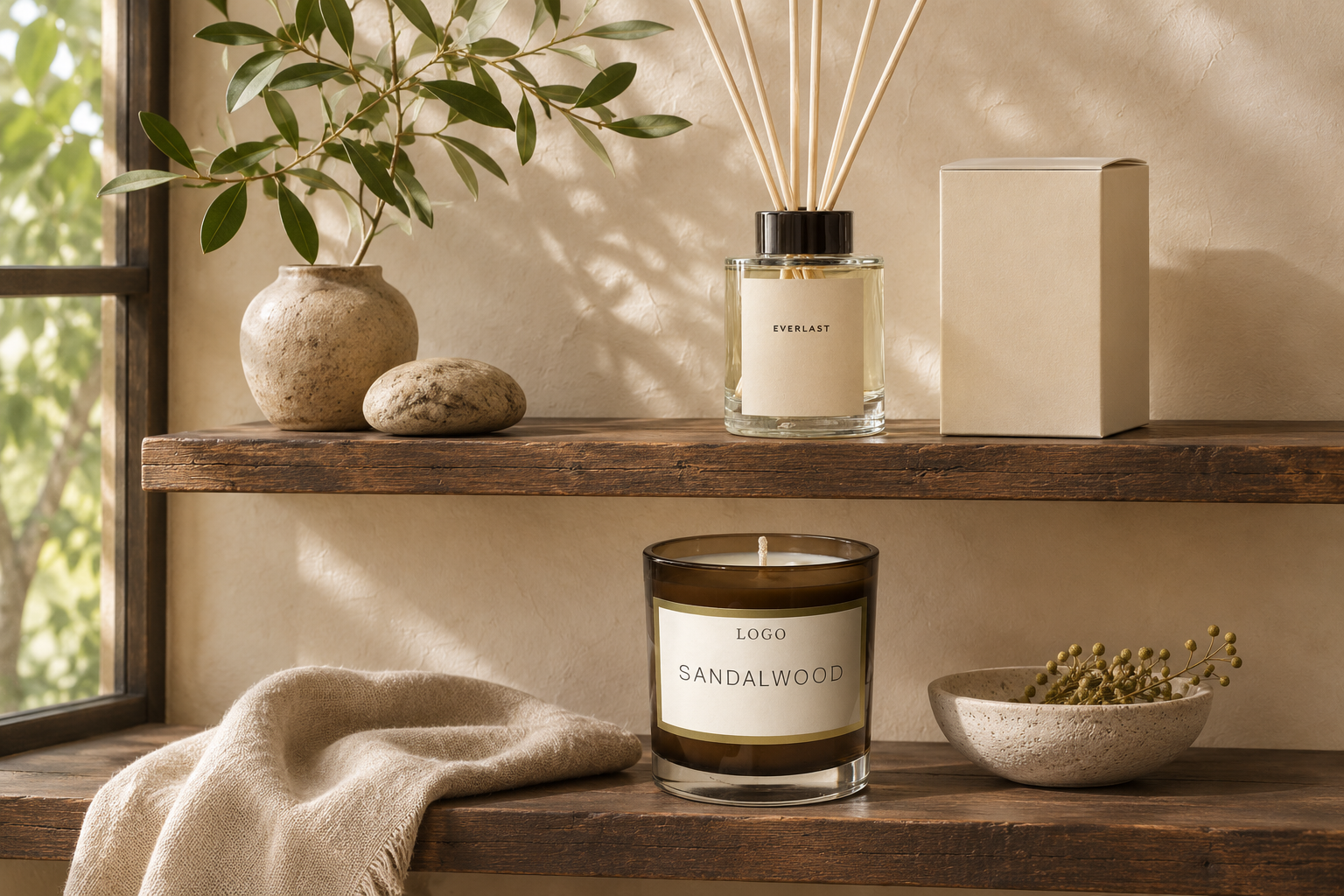
A paired display can introduce complementary formats without implying that they share one formulation.
6. Make the shelf message useful
Use short product cards that explain format, fragrance direction and what the package contains. Keep safety and care information available. Staff should be able to distinguish a complete diffuser from an empty bottle immediately.
For a joint display, place sealed stock behind clearly identified testers. Keep fragrance sampling controlled rather than opening every product at once. Finally, track sales by format and fragrance, not just by the collection name.
Our wholesale buying guide explains the next steps for specifications, samples and quotations.
Frequently asked questions
Are reed diffusers better than candles for every room?
No. They avoid an open flame, but placement, spills, household needs and the product's instructions still matter. Choose by intended use rather than treating either format as universally suitable.
Should a new retail brand offer both formats?
Only when the second format serves a clear customer need and fits the buying budget. You can sample both before deciding which range to launch.
Can the same fragrance be used in both products?
A coordinated fragrance direction may be possible. However, approve the finished candle and diffuser individually because their formulations and scent delivery differ.
Does a diffuser bottle price include liquid and reeds?
Not always. Check the product's empty or filled status and ask for an itemized specification showing liquid, reeds, closure and packaging.
Compare two formats with Lumelle
Send us the candle and diffuser links you prefer, the quantity per fragrance, your target selling price and destination. Include whether you want individual products or a gift set.
Ask our team to prepare a candle and diffuser comparison. We will review the proposed specifications and MOQ basis. All quotations exclude shipping costs.
References
- CandleScience. Diffuser Reeds. Manufacturer information on reeds and liquid movement; not a specification for Lumelle products. ↩
- National Candle Association. Candle Safety Tips. General candle-use precautions; always follow the finished product's instructions. ↩