How to Buy Wholesale Scented Candles: A Complete Guide
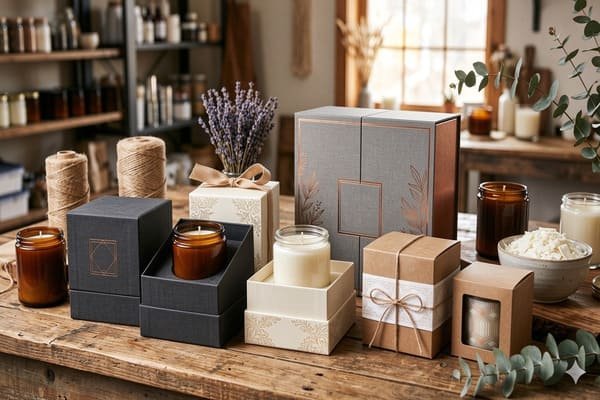
Buying wholesale scented candles involves more than choosing an attractive jar and negotiating a unit price.
For retailers, boutique owners, distributors, and emerging candle brands, a successful order depends on choosing the right products, understanding minimum order quantities (MOQs), evaluating samples, and planning packaging and delivery.
Two suppliers may quote different prices for what appears to be the same candle. However, the difference could come from wax weight, container quality, fragrance formulation, packaging, or the services included.
The key to buying wholesale scented candles is to compare complete product specifications, not just prices.
This guide explains the wholesale candle purchasing process, from selecting your first collection to approving samples and preparing for international delivery.
1. Decide What Kind of Wholesale Candles Your Business Needs
Before contacting suppliers, define how the candles will be sold and who will buy them.
The requirements of a boutique retailer may be quite different from those of a hotel, corporate gift supplier, or private label brand.
Choose Your Business Model
There are three common ways to source wholesale scented candles.
| Sourcing Model | What You Buy | Best For |
|---|---|---|
| Ready-made wholesale | Existing candle designs and specifications | Retailers and distributors |
| Private label candles | Existing candle formats with customized branding or packaging | Brands launching their own collections |
| Fully custom candles | Products developed around new design or fragrance requirements | Established brands and specialized projects |
Ready-made wholesale is generally the simplest starting point. You choose existing products and confirm available specifications, quantities, and packaging.
Private label production gives you greater control over brand identity. Depending on the supplier, you may customize the label, fragrance, jar finish, or gift box.
Fully custom development may involve a new vessel design, proprietary fragrance, or specialized packaging. These projects can require additional development costs and longer preparation.
If you are planning a private label collection, explore Lumelle's custom and private label options to understand the information needed for an initial project review.
Start With a Focused Product Range
Launching with too many fragrances and container styles can make your first wholesale order unnecessarily complicated.
For example, a boutique could begin with:
- One main glass jar design.
- Two or three complementary fragrances.
- A consistent label and packaging format.
- One target retail price range.
This approach can simplify inventory management, product photography, and repeat ordering.
It also makes it easier to identify which fragrances or designs deserve a larger second order.
2. Compare Candle Specifications Before Comparing Prices
A product photo is useful for choosing a visual style, but it does not provide enough information to evaluate a wholesale quotation.
Ask suppliers for a written specification for each candle.
Check the Container, Wax, and Wick
The main specifications should include:
| Specification | Why It Matters |
|---|---|
| Container dimensions | Determines shelf space and packaging size |
| Vessel capacity | Describes the container's volume |
| Net wax weight | Identifies the weight of the candle filling |
| Wax composition | Affects product positioning and performance |
| Fragrance | Determines the intended scent profile |
| Wick configuration | Influences burning characteristics |
| Available burn time | Supports product listings and customer information |
| Packaging | Affects presentation, protection, and cost |
One particularly important distinction is vessel capacity versus net wax weight.
A candle jar described as 200 ml does not necessarily contain 200 g of wax. The container's volume and the filling weight are different measurements.
For a fair comparison, confirm both.
Choose a Candle That Fits Your Market
Different formats support different retail strategies.
A compact candle may work well for gift boxes and smaller boutiques. A larger decorative vessel may be more suitable for a premium home fragrance collection.
The fragrance and wax composition also matter.
Soy wax, paraffin wax, and blended formulations can produce different results depending on the wick, fragrance oil, and container.
For a detailed material comparison, buyers should evaluate both fragrance performance and the finished candle's appearance.
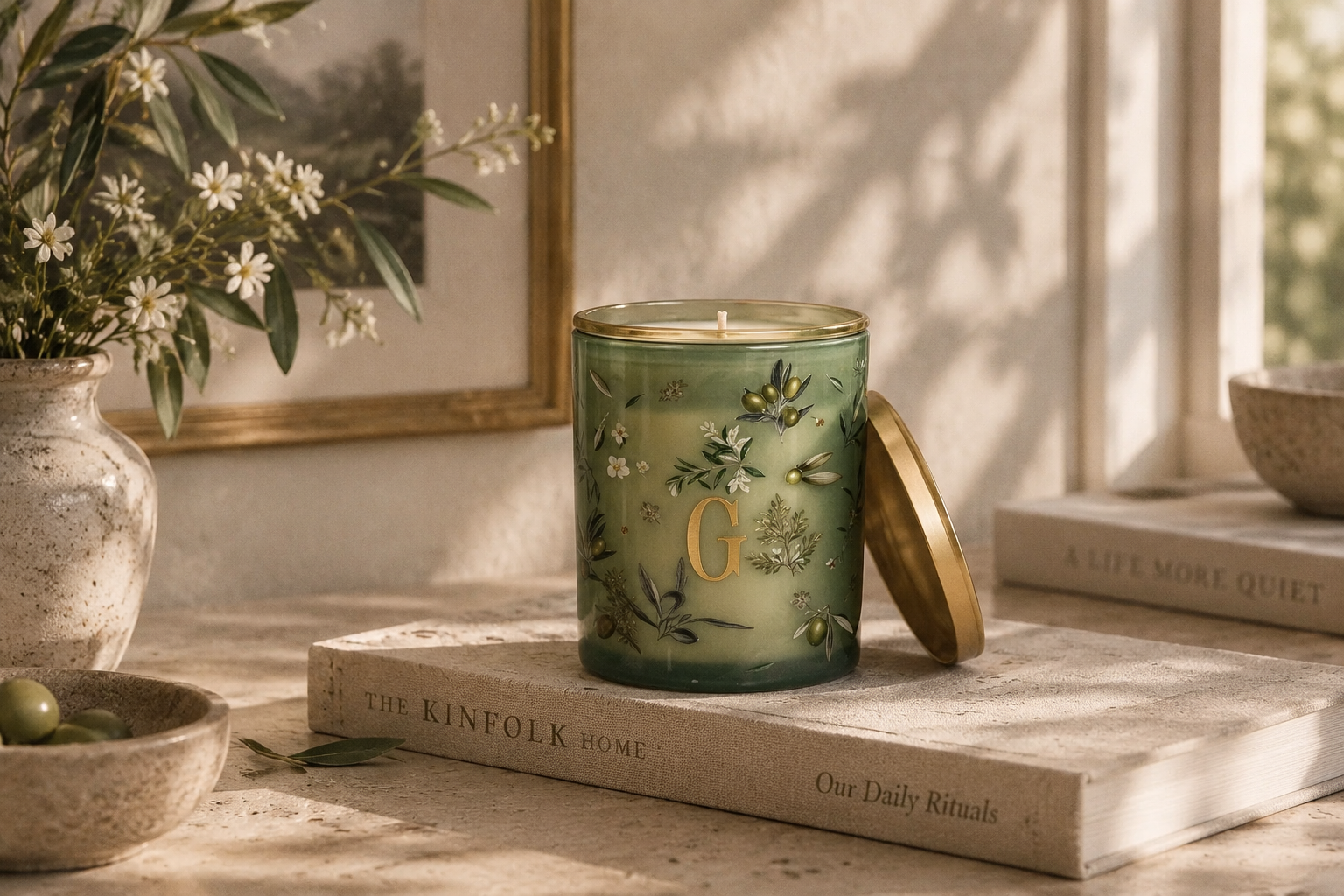
Illustrative glass-vessel design concept. Buyers should confirm the actual specifications and available finishes for their selected products.
You can compare different designs in Lumelle's wholesale scented candle collection.
3. Understand Minimum Order Quantities (MOQs)
Minimum order quantity is one of the first questions buyers ask when purchasing candles in bulk.
However, the important question is not simply:
What is your MOQ?
It is:
How is the MOQ calculated for different designs, fragrances, and packaging options?
Why MOQ Calculation Matters
Suppose you want to order:
- 500 amber glass candles in a woody fragrance.
- 500 frosted glass candles in a floral fragrance.
Your total quantity is 1,000 pieces.
But that does not automatically mean you meet the supplier's MOQ.
Some suppliers apply the minimum per product design. Others apply it per fragrance, packaging configuration, or production batch.
Combining products may be possible, but this needs confirmation before quotation.
How Lumelle Calculates MOQ
Lumelle's stated minimum order quantity is 1,000 pieces.
Depending on the order, the minimum may be assessed by design, by fragrance, or by a specific combination of both.
Buyers should provide the quantity required for each design and fragrance so the available order arrangement can be confirmed.
For more details, see the Lumelle Wholesale Candle Programme.
What If You Want Several Fragrances?
Before placing an order, request confirmation of:
- The MOQ for each candle design.
- Whether different fragrances can be combined.
- Whether custom packaging changes the minimum.
- Whether gift sets are counted by finished set or individual item.
- Whether reorders have different minimum quantities.
Clarifying these details early helps avoid redesigning your collection after the quotation stage.
4. How Much Do Wholesale Scented Candles Cost?
Wholesale candle prices depend on more than wax and fragrance.
The final quotation may also reflect the vessel, lid, packaging, decoration, production requirements, and order quantity.
What Affects the Unit Price?
| Cost Factor | Examples |
|---|---|
| Wax | Soy, paraffin, palm, or specific blends |
| Fragrance | Standard fragrance or custom scent development |
| Container | Glass, ceramic, metal, and decorative finishes |
| Wick | Single-wick or multi-wick configurations |
| Branding | Printed labels, direct printing, or other decoration |
| Packaging | Standard carton, retail box, or luxury gift box |
| Order quantity | Production volume for each SKU |
| Shipping | Freight and delivery arrangements |
Why the Cheapest Quote May Not Be the Best
Imagine comparing two supplier quotations.
Supplier A offers a lower unit price, but the quotation covers a smaller candle without an individual retail box.
Supplier B offers a higher unit price for a larger candle with additional packaging.
These are not equivalent products.
Before comparing prices, ask both suppliers to quote against the same specifications.
A useful quotation should identify:
- Product model and dimensions.
- Net wax weight and fragrance specification.
- Container and lid configuration.
- Logo or label requirements.
- Individual packaging.
- Quantity for each SKU.
- Unit price and total price.
- Sampling charges, if applicable.
- Production lead time.
- Delivery terms and freight arrangements.
Calculate Your Landed Cost
For imported candles, the factory price is only part of the purchasing cost.
A practical estimate is:
Landed cost = Product cost + Packaging + Freight + Insurance (if separately charged) + Import duties and taxes + Destination charges
Divide the applicable total cost by the expected number of sellable units to estimate the cost per candle.
This helps you decide whether your target retail price leaves enough room for operating expenses and profit.
The International Chamber of Commerce's Incoterms rules explain how responsibilities, costs, and risks are allocated between buyers and sellers under different delivery terms.[^1]
Always confirm the named delivery term and location in writing before comparing international quotations.
5. Request Samples Before Placing a Bulk Order
A wholesale candle should never be approved based solely on product photos.
Samples allow you to inspect the actual product and evaluate whether it meets your brand's expectations.
What Should You Check?
Appearance
Inspect the glass, surface finish, lid fit, wax appearance, wick positioning, and any labels or decoration.
Fragrance
Evaluate the cold throw when the candle is unlit. If you are also assessing fragrance performance during burning, conduct a controlled evaluation.
Burning Performance
Ask for available burn-test information for the exact candle specification. Check how the candle behaves throughout its usable life, including flame stability, visible soot, and container performance.
Packaging
Inspect the retail box, protective insert, print quality, and how the candle fits inside the packaging.
Consistency
If you are considering multiple fragrances or colors, confirm whether the same quality and appearance can be achieved across the proposed collection.
CandleScience recommends testing the complete candle because wax, fragrance, wick, and container characteristics all affect burning performance.[^2]
Understand Sample Charges
At Lumelle, standard samples are free of charge, while customized samples incur a fee.
Sample availability, preparation time, customized sample charges, and shipping costs are confirmed for the specific request.
Approve a Written Specification
Once a sample meets your requirements, record exactly what has been approved.
The approved specification should include the product model, wax, fragrance, wick, container, decoration, packaging, and any agreed tolerances.
This document becomes an important reference for bulk production and future reorders.
A sample approval should be tied to a specific product specification, not simply a photograph or verbal agreement.
6. Check Candle Quality and Market Requirements
Quality control becomes especially important when ordering candles for resale.
A visually attractive candle is not sufficient if its performance, labeling, or documentation does not meet the requirements of the destination market.
Product Testing
Ask your supplier what product-specific testing information is available.
Relevant checks may include:
- Burning behavior and flame stability.
- Visible soot and wick performance.
- Container suitability.
- Surface appearance and filling consistency.
- Label accuracy.
- Packaging integrity.
A factory audit and product safety testing are not the same thing. A social compliance audit does not, by itself, demonstrate that a candle satisfies the requirements of a particular market.
Requirements for the United States
The U.S. Consumer Product Safety Commission provides business guidance covering applicable candle requirements and relevant voluntary ASTM standards.
These include standards concerning candle fire safety, safety labeling, and glass candle containers.[^3]
The applicable obligations depend on the product.
Requirements for the European Market
For buyers importing candles into the EU/EEA, fragrance ingredients may affect classification and labeling under the CLP Regulation.
The European Chemicals Agency explains that candles are treated as chemical mixtures under relevant EU chemicals legislation. Depending on their composition and classification, additional labeling, packaging, safety data, or notification obligations may apply.[^4]
Buyer's checklist: Confirm the destination country and sales channel with the supplier, request the available documentation for the specific formulation, and have market-specific compliance requirements reviewed before importing.
Do not assume that one generic certificate covers every candle, fragrance, or destination market.
7. Plan Retail Packaging and Shipping Protection Together
Packaging has two important functions.
It supports your product's visual identity, and it protects the candle during handling and transportation.
A beautiful gift box may look excellent on a shelf but still require additional protection inside the shipping carton.
Retail Packaging Options
Depending on the product and order, options may include:
- Standard individual boxes.
- Printed branded cartons.
- Rigid gift boxes.
- Protective inserts.
- Customized labels or decoration.
- Coordinated packaging for multiple products.
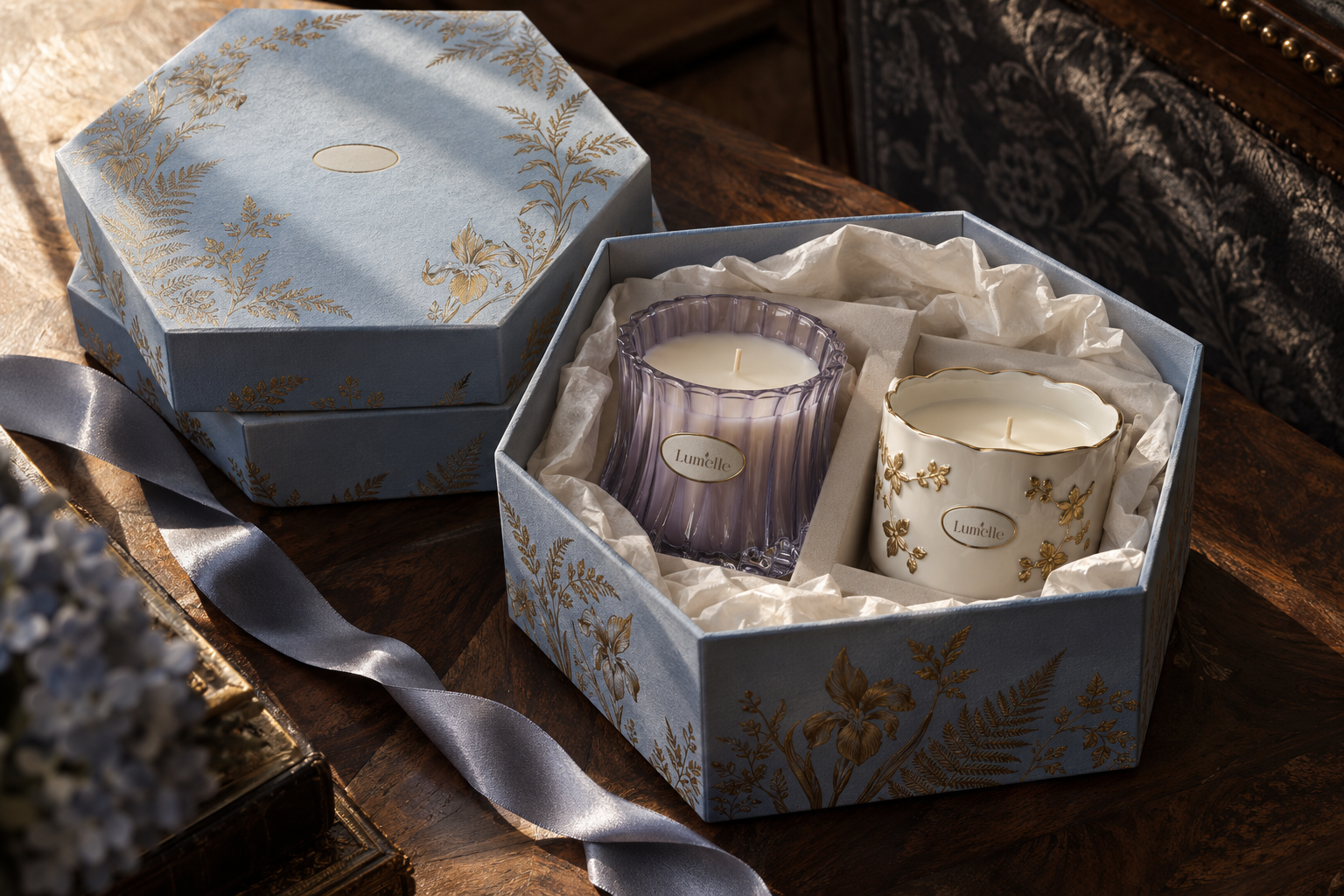
Illustrative gift-box design concept. Packaging construction, decoration, and available customization are confirmed for each project.
Ask About Export Carton Specifications
Glass candles require careful packing for international transportation.
Before arranging freight, ask your supplier to confirm:
| Shipping Detail | Why You Need It |
|---|---|
| Units per carton | Helps calculate carton quantity |
| Carton dimensions | Required for volume and freight calculations |
| Gross weight | Needed for transport planning |
| Protective materials | Helps evaluate glass protection |
| Pallet requirements | Relevant for warehouse and freight handling |
| Shipping marks | Helps identify cartons and product batches |
For wholesale deliveries, the outer carton should be suitable for the agreed shipping and handling conditions.
Depending on the shipment, additional transit packaging or palletization may be necessary.
8. Confirm Production Lead Time and Delivery Schedule
Wholesale buyers often confuse production lead time with total delivery time.
They are not the same.
Production lead time refers to the agreed manufacturing period. International transportation, customs clearance, and final delivery occur separately.
How Long Does a Wholesale Candle Order Take?
Lumelle's usual order lead time is 40–45 days.
However, the quotation should confirm when that period begins and which production stages it includes.
A typical purchasing schedule involves:
- Product selection and initial quotation.
- Sample preparation and review.
- Artwork and specification approval.
- Order confirmation and payment.
- Production and quality checks.
- Packing and shipment.
- Customs clearance and final delivery.
Custom development may introduce additional preparation time.
For example, creating a new vessel or signature fragrance can require separate feasibility reviews, tooling, and multiple sample stages.
Work Backward From Your Launch Date
If your candles are intended for Christmas, a seasonal promotion, or a retail store opening, plan the schedule backward from the date the products must be available for sale.
Include time for:
- Sample evaluation and revisions.
- Final label and packaging approval.
- Production.
- International transportation.
- Customs clearance.
- Warehouse receiving and distribution.
An order can leave the factory on schedule and still arrive too late for a retail promotion if shipping time was overlooked.
9. Choose a Supplier You Can Reorder From
The first successful order is important, but long-term product consistency is often more valuable.
Retailers and distributors need confidence that a product can be supplied again without unexpected changes to its appearance or performance.
Questions to Ask a Wholesale Candle Supplier
Before selecting a supplier, consider asking:
Can the supplier provide detailed specifications?
You should know exactly which product you are buying.
Are physical samples available?
Samples allow you to evaluate the product before committing to production.
Can the approved formula be repeated?
Confirm how the supplier maintains records of the wax, fragrance, wick, and container configuration.
Can the supplier provide carton data?
This is essential for freight planning and inventory receiving.
What happens when a material changes?
Ask whether material substitutions or formulation changes require approval before production.
Can the supplier support future collections?
A supplier offering coordinated containers, fragrance options, and gift packaging may make it easier to expand your product range.
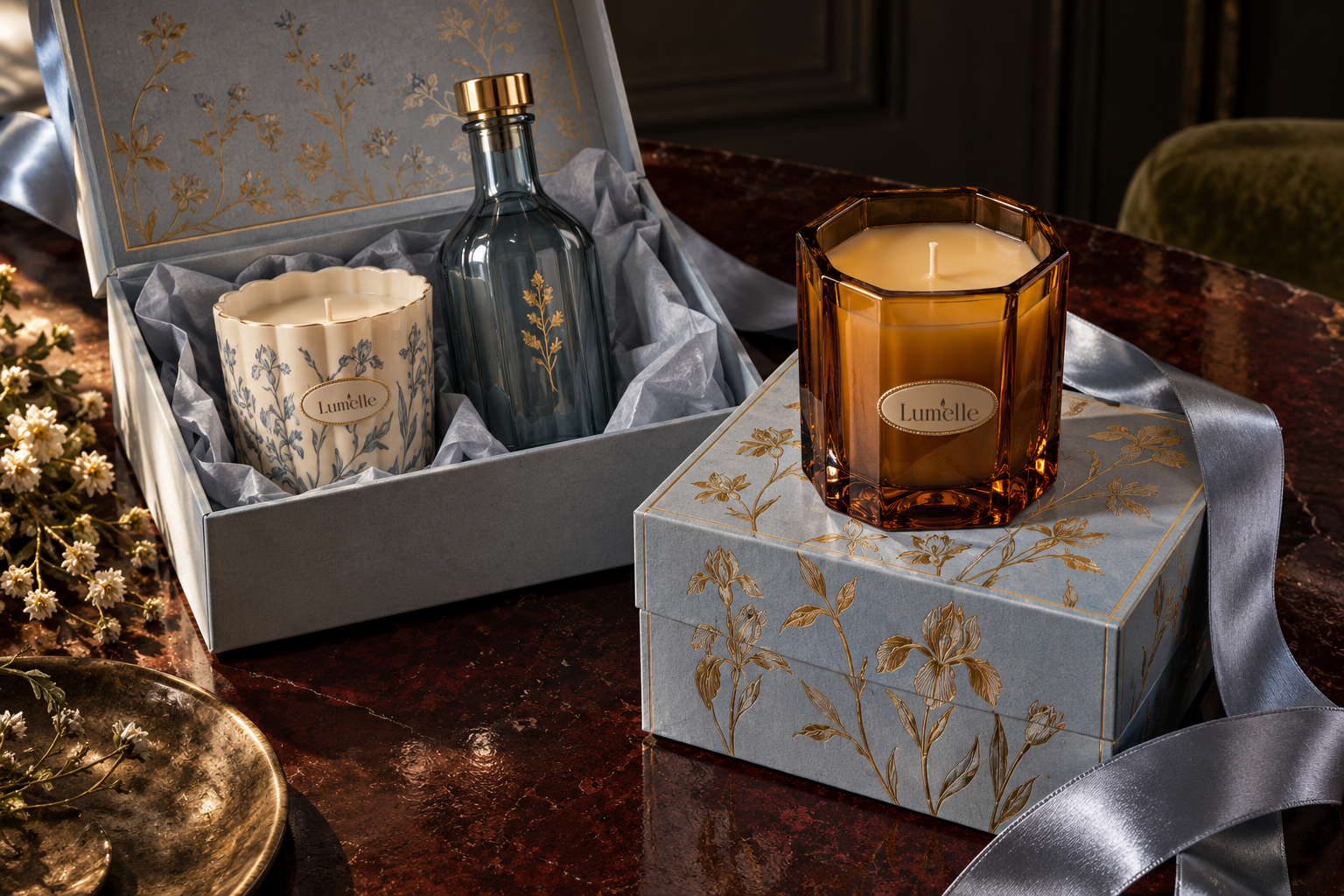
Illustrative coordinated home fragrance collection showing how candles and packaging can form a consistent visual range.
A strong wholesale relationship is built around clear specifications, reliable communication, and consistent product quality.
10. What Information Should You Send for an Accurate Wholesale Quote?
A clear initial enquiry helps the supplier recommend appropriate products and prepare a more useful quotation.
You do not need to finalize every detail before contacting a supplier.
However, the following information is a good starting point.
Wholesale Candle Enquiry Checklist
| Information | What to Provide |
|---|---|
| Business type | Retail store, distributor, hotel, brand, or gifting company |
| Product | Candle type, image, product link, or model |
| Quantity | Estimated units for each design and fragrance |
| Container | Preferred material, color, size, and finish |
| Wax | Any preferred wax type |
| Fragrance | Preferred scent direction or reference |
| Branding | Standard product or private label |
| Packaging | Individual box, gift box, or other requirements |
| Destination | Country, city, and postal code |
| Timeline | Preferred delivery or launch date |
If you have an existing candle design in mind, include reference photographs.
If you are developing your own brand, include logo artwork or packaging references when available.
Example Wholesale Enquiry
Subject: Wholesale Scented Candle Enquiry
Hello,
We are looking for scented candles for our retail collection.
Our initial requirements are:
- Product: Glass jar scented candles
- Quantity: Approximately 1,000 pieces
- Fragrances: Two or three options, subject to MOQ confirmation
- Wax: Soy wax or a suitable blend
- Packaging: Individual retail boxes
- Branding: Private label preferred
- Destination: [Country and city]
- Required arrival: [Target date]
Could you please confirm the available designs, MOQ arrangements, sample options, production lead time, and quotation details?
Thank you.
A brief like this gives the supplier enough information to recommend options and identify any requirements that need further discussion.
Frequently Asked Questions
What is the minimum order quantity for wholesale scented candles?
The MOQ varies by supplier, product, and customization requirements. Lumelle's stated minimum is 1,000 pieces, with the exact calculation confirmed according to the selected designs and fragrances.
Can I order multiple fragrances in one wholesale order?
Often, yes, but it depends on the supplier's MOQ and production arrangements. Confirm the quantity for each fragrance and design before placing an order.
Can I put my own logo on wholesale candles?
Many suppliers offer private label options. At Lumelle, buyers can discuss logo, label, container finish, fragrance, and packaging customization, subject to the selected product and order requirements.
Are wholesale candle samples free?
Sample policies vary. Lumelle offers standard samples free of charge, while customized samples carry a fee. Shipping costs and sample arrangements should be confirmed separately.
How long does wholesale candle production take?
Lead time depends on the supplier, product, and customization. Lumelle's usual order lead time is 40–45 days, with the exact production schedule confirmed in the quotation. International delivery time is additional.
Does a wholesale candle quotation include shipping?
Not necessarily. Lumelle's quotations exclude shipping costs. Buyers should provide their destination and confirm the freight arrangements, delivery term, and related charges before ordering.
What should I inspect before approving a bulk candle order?
Check the wax and fragrance specification, wick, container, labeling, packaging, and available burn-test information. Approve a physical sample and written specification before production.
Conclusion: Buy Wholesale Candles With a Clear Plan
Buying wholesale scented candles does not have to be complicated.
The most important decisions are made before production begins.
Start with a focused product range, compare complete specifications, clarify the MOQ, and request samples before confirming a large order.
Then review the quotation carefully, including packaging, quality requirements, production timing, and international shipping arrangements.
For retailers and emerging brands, a reliable wholesale process is not only about securing an attractive purchase price.
It is about sourcing candles that meet your quality expectations, fit your customers, and can be reordered consistently as your business grows.
Source Wholesale Scented Candles With Lumelle
Lumelle supplies scented candles, reed diffusers, and fragrance gift sets for retailers, distributors, hospitality businesses, and private label projects.
You can begin with an existing candle design or discuss changes to the wax, fragrance, container appearance, branding, and packaging.
Explore our wholesale scented candle collection or learn about the Lumelle Wholesale Candle Programme.
Already have a product or collection in mind?
Share your preferred designs, quantities, destination, and customization requirements.
Contact Lumelle to Request Candle Specifications, Samples, or a Wholesale Quote.
References
[^1]: International Chamber of Commerce. Incoterms® 2020. Official information on international trade terms and the allocation of buyer and seller responsibilities.
[^2]: CandleScience. How to Conduct a Basic Burn Test. Practical guidance on evaluating candle formulations, wick performance, and burning behavior.
[^3]: U.S. Consumer Product Safety Commission. Candles Business Guidance. Federal candle business requirements and relevant ASTM safety standards.
[^4]: European Chemicals Agency. Complying With CLP and Other Legal Requirements When Making or Importing Candles. Official guidance on EU candle classification, chemical labeling, packaging, and related obligations.