Private Label vs. White Label Candles: Which Is Right for Your Brand?
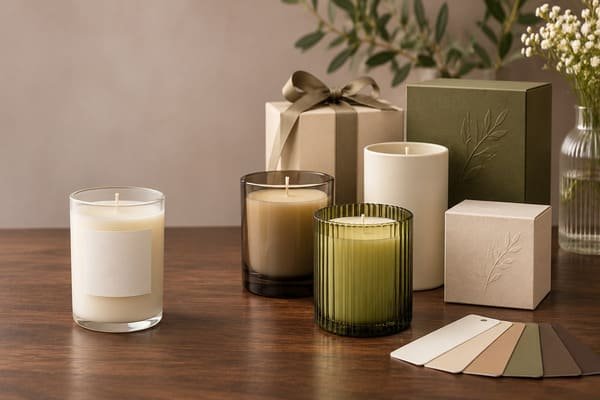
A candle can carry your brand's logo and still be identical to one sold by another retailer.
That is one of the key differences between white label and private label candles.
Both allow businesses to sell scented candles under their own names without operating a candle factory. But they offer different levels of product customization, investment, and brand differentiation.
For a boutique launching its first collection, adding a custom label to an existing candle may be enough. For a luxury fragrance brand, a signature scent or distinctive vessel could be central to the business.
So, which approach makes more sense?
This guide compares the options to help you choose a manufacturing arrangement that matches your brand, budget, and product goals.
1. White Label vs. Private Label Candles: What's the Difference?
The simplest distinction is how much of the original candle you can change.
White Label Candles: An Existing Product With Your Branding
White label candles are generally existing products offered by a manufacturer to multiple businesses.
The wax, fragrance, wick, and container are usually already specified. You select a product and add your logo, label, or branded packaging.
For example, a boutique might choose an existing amber glass candle and sell it under its own brand name.
The advantage is that you can focus on branding and sales without developing a new candle.
However, other retailers may offer the same underlying product with different labels.
Private Label Candles: More Control Over the Product
Private label manufacturing typically offers greater flexibility.
Depending on the supplier, you may be able to select or develop:
- Fragrance combinations.
- Wax formulations.
- Container colors and finishes.
- Labels and decorative printing.
- Custom gift packaging.
For example, a home fragrance brand might choose an existing glass vessel but develop its own fragrance and packaging concept.
The result can be more distinctive than a standard white label product without requiring every component to be designed from scratch.
What About Fully Custom Candles?
Some projects go further.
A fully custom candle may involve a newly developed fragrance, an original ceramic vessel, or a container requiring new tooling.
This creates opportunities for greater product differentiation, but it can also require additional design work, testing, and upfront investment.
Key Differences at a Glance
| Feature | White Label | Private Label | Fully Custom |
|---|---|---|---|
| Base product | Existing candle | Existing or modified design | Newly developed elements |
| Fragrance | Existing options | Selected or custom scent | Bespoke fragrance possible |
| Container | Standard | Existing or customized | Original design possible |
| Branding | Logo and labels | Broader customization | Fully coordinated design |
| Development cost | Usually lower | Depends on changes | Often higher |
| Preparation | Fewer development steps | May require sampling | More development stages |
| Differentiation | Limited | Moderate to high | Potentially highest |
These are typical arrangements rather than fixed industry definitions. As CandleScience explains, suppliers may offer different levels of white label and private label services.[^1]
Before choosing a manufacturer, confirm exactly which parts of the product can be customized.
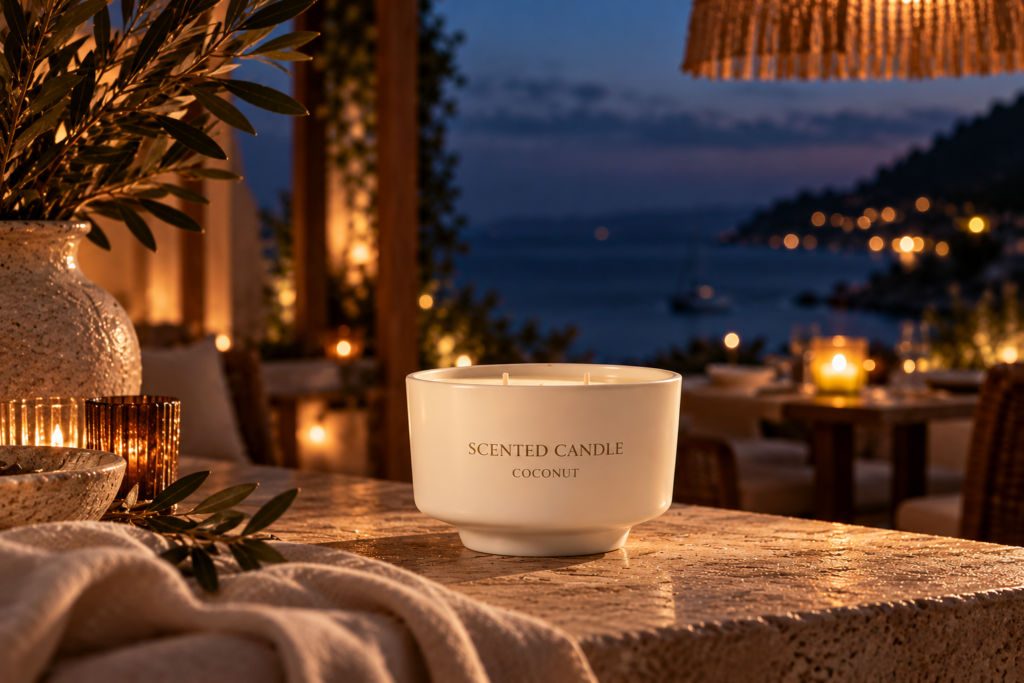
An existing candle design can provide a starting point for a branded collection.
2. How Much Customization Does Your Brand Actually Need?
More customization does not automatically produce a better product.
The useful question is which product features matter most to your customers.
Option A: Start With an Existing Candle
Suppose you operate a home décor boutique and want to introduce three scented candles.
Your main priorities are attractive packaging, consistent quality, and a product that fits your store's aesthetic.
You may not need to develop a new fragrance or container.
An existing candle with your own label could be a practical starting point.
Option B: Build a Recognizable Fragrance Collection
Now imagine you are launching a dedicated home fragrance brand.
You want customers to recognize your signature scent and packaging.
In this case, private label customization may be more appropriate.
You could start with an existing vessel and invest in fragrance selection, branded decoration, and coordinated gift boxes.
This helps create a consistent product identity without immediately commissioning a new container mold.
Option C: Develop a Distinctive Luxury Product
For some brands, the vessel itself is a central part of the design.
You might want an original ceramic shape, an embossed logo, or a proprietary fragrance.
Such requirements may justify a fully custom project.
However, new molds, fragrance development, and additional testing should be considered before approving the budget.
A useful approach is to customize the elements your customers will notice and value most.
For brands comparing different product styles, explore Lumelle's scented candle collection.
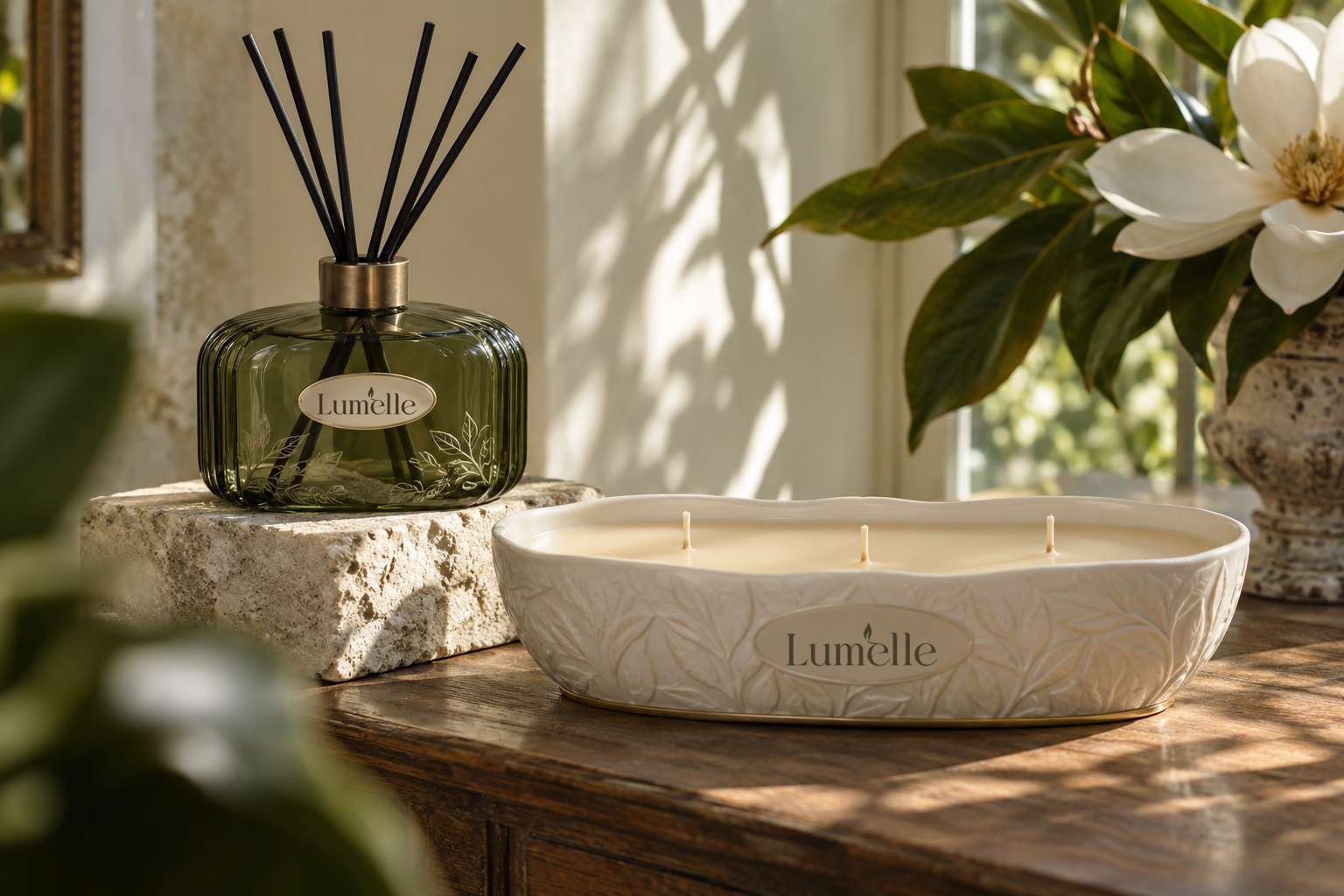
Illustrative home fragrance collection showing how coordinated vessels and finishes can support brand identity.
3. What Affects the Cost of Private Label Candles?
White label candles often involve fewer development expenses because the base product already exists.
Private label costs depend on what you want to change.
Three decisions are particularly important.
Fragrance: Existing Scent or Custom Development?
Selecting a fragrance from a supplier's existing range is generally simpler than developing a new scent.
A custom fragrance may require additional samples, revisions, and formulation work.
If fragrance is central to your brand, this investment may be worthwhile.
Container: Existing Mold or New Design?
Using an existing glass vessel with a different finish can be more economical than developing an entirely new shape.
A new vessel may require drawings, tooling, dimensional checks, and compatibility testing.
Changing the container can also affect candle performance, so the finished formulation must be evaluated.[^2]
Packaging: Standard Label or Custom Gift Box?
Packaging is often one of the most visible ways to differentiate a candle.
A printed label may be sufficient for a minimalist retail collection.
A luxury gift range might require an embossed box, protective insert, or specialized printing.
These choices can affect both setup costs and the finished unit price.
| Customization | Potential Additional Cost |
|---|---|
| Custom logo or label | Artwork, printing, setup |
| New fragrance | Development, samples, testing |
| New container shape | Design, molds, tooling |
| Custom gift box | Structural design, printing, inserts |
When comparing quotations, separate one-time development costs from recurring costs per candle.
A custom project may have a higher initial investment without necessarily having proportionally higher costs on every future order.
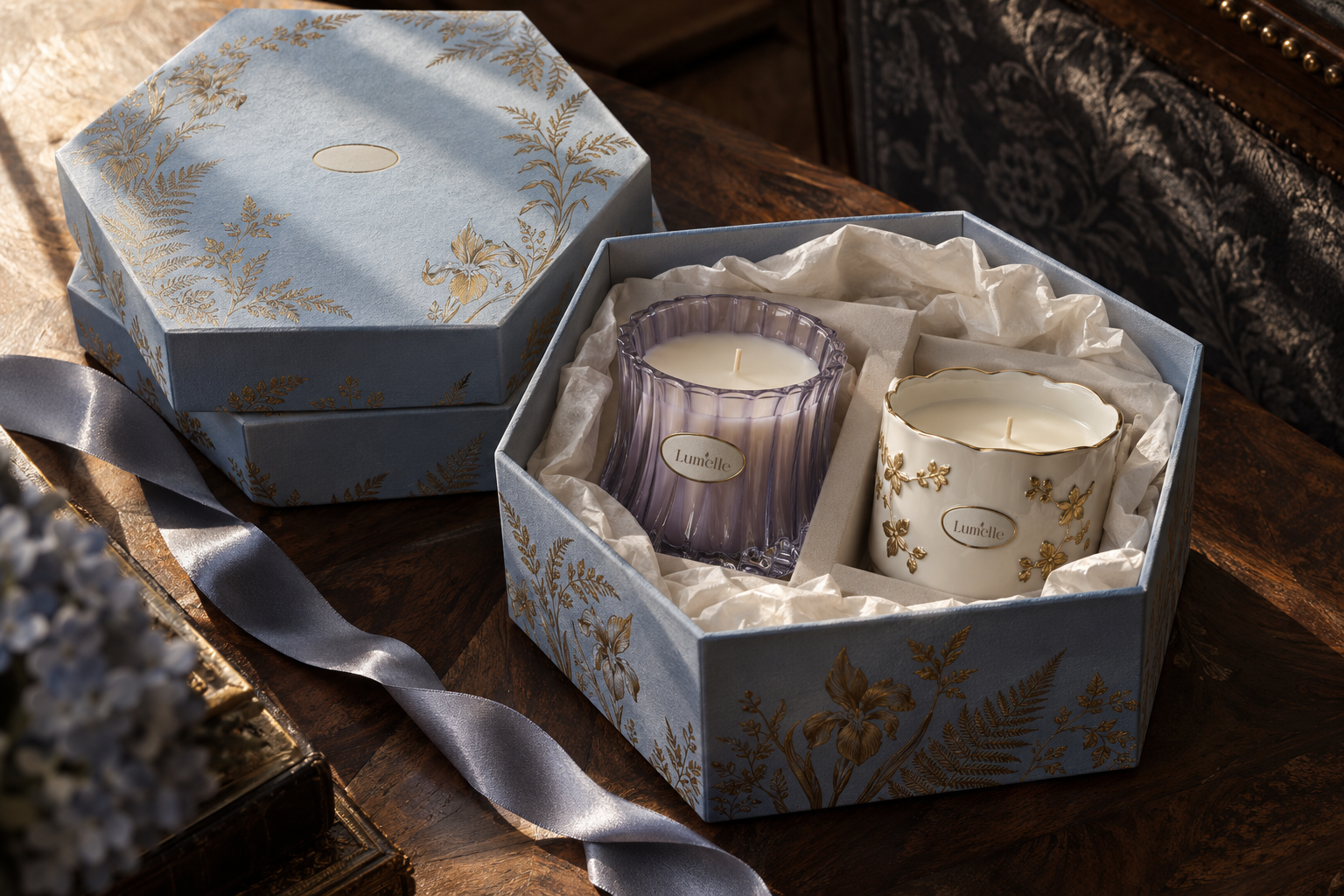
Illustrative gift packaging concept. Custom packaging options should be confirmed for each project.
4. Does Private Label Mean Your Candle Is Exclusive?
Not necessarily.
This is an important distinction for brands investing in custom products.
Private label manufacturing does not automatically give you ownership of the fragrance formula, container design, or manufacturing process.
For example, a manufacturer might develop a fragrance based on your brief while retaining ownership of the formula.
Similarly, paying for a new mold does not automatically establish who can use it.
Before investing in exclusive product development, clarify three matters.
Fragrance Rights
Can the supplier use the same fragrance for other customers?
Will your brand receive exclusive usage rights? If so, are they limited by territory, product category, or time?
Container and Tooling Ownership
If you pay for a custom mold, who owns it?
Can the manufacturer use it for other projects, and what happens if you change suppliers?
Confidentiality and Product Exclusivity
What information must remain confidential?
Are there restrictions on supplying the same finished design to competing brands?
The World Intellectual Property Organization explains that confidential formulas and commercially valuable technical information may qualify for trade secret protection when the relevant conditions are met.[^3]
For any important exclusivity arrangement, the scope of the agreement should be documented in writing.
An exclusive-looking product and a contractually exclusive product are not necessarily the same thing.
5. Which Option Should You Choose?
Your decision should reflect your product strategy rather than the terminology used by a supplier.
Choose white label when:
- You want an existing candle with your branding.
- You are testing customer demand.
- You do not need a unique formulation or container.
Choose private label when:
- You want a more recognizable candle collection.
- Fragrance, vessel finish, or packaging matters to your brand.
- You want customization without necessarily developing everything from scratch.
Consider fully custom development when:
- An original fragrance or vessel is central to your concept.
- Your brand requires a distinctive finished product.
- You are prepared for additional development and approval stages.
Before Contacting a Manufacturer
Prepare a short product brief covering:
- Product concept: Existing design or custom development.
- Customization: Fragrance, wax, vessel, branding, and packaging.
- Quantity: Estimated units for each design and fragrance.
- Market: Destination country and target customer.
- Timeline: Intended product launch or delivery date.
At Lumelle, the stated standard MOQ is 1,000 pieces, with the applicable arrangement confirmed according to the product and fragrance combination. Custom development requirements are reviewed separately.
You can explore Lumelle's private label services for available customization options.
Frequently Asked Questions
Can I start a candle brand with white label products?
Yes. White label manufacturing allows you to sell existing candle products under your own branding without operating a manufacturing facility.
Are private label candles more expensive?
They can involve higher development costs, especially when custom fragrances, containers, or packaging are required. The final price depends on the specifications and order quantity.
Can I create an exclusive candle fragrance?
Custom fragrance development may be available, but exclusivity must be agreed upon separately. Confirm usage rights, ownership, and any restrictions with your manufacturer.
Should a new brand choose white label or private label?
If an existing candle meets your needs, white label may be a practical starting point. If fragrance, appearance, or product differentiation is essential to your brand, consider private label customization.
Conclusion: Build a Candle Collection Around Your Brand
White label and private label candles offer different ways to bring a branded product to market.
White label is useful when you want to start with an existing product. Private label gives you greater flexibility to create a distinctive fragrance collection, while fully custom development may be appropriate for more specialized concepts.
The best choice is the one that supports your brand identity, commercial goals, and available investment.
Before proceeding, confirm exactly what can be customized, what the development costs include, and whether any product exclusivity applies.
Develop Your Candle Collection With Lumelle
Lumelle supports wholesale and private label scented candle projects, including selected options for fragrance, containers, branding, and packaging.
Whether you want to begin with an existing design or explore a custom candle concept, our team can review your requirements and recommend suitable options.
Share your preferred style, quantity, customization needs, and destination market.
Contact Lumelle to Discuss Your Candle Project.
References
[^1]: CandleScience. White Label and Private Label Candles. Industry explanation of sourcing models and customization.
[^2]: CandleScience. How to Conduct a Basic Burn Test. Guidance on how wax, fragrance, wick, and vessel affect finished candle performance.
[^3]: World Intellectual Property Organization. Frequently Asked Questions on Trade Secrets. Guidance on confidential formulas, trade secrets, and contractual protection.