How to Choose Candle Lids and Decorative Finishes for a Premium Collection
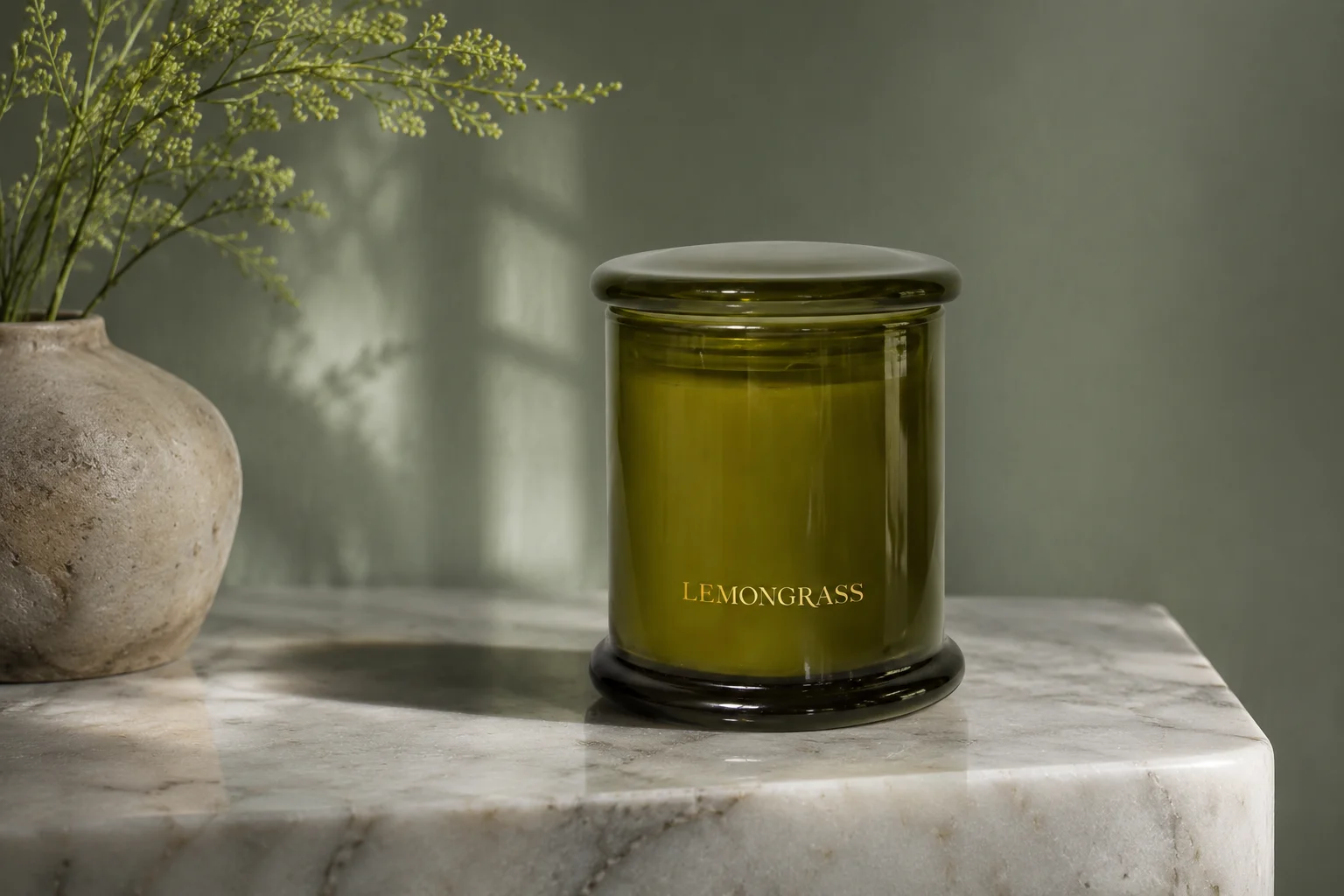
Candle lids and finishes should make a collection feel coherent. A lid that looks attractive in isolation may clash with the vessel, add unwanted weight or complicate packing.
Start with the complete product: vessel, lid, label and retail box. Then decide which detail should lead the design and which elements should remain quiet.
This guide helps buyers compare options and approve the details that matter in everyday handling and repeat production.
1. Define what the lid is meant to do
Ask whether the lid is simply a decorative cover or has a confirmed sealing function. Do not call it airtight without supporting information.
Also avoid presenting an ordinary lid as a candle extinguisher. Use the finished product's instructions. General candle safety guidance recommends appropriate extinguishing and allowing the candle to cool before handling.1
For a retail product, review how easily customers remove and replace the lid. A beautiful cover that sticks or sits unevenly can undermine the opening experience.
2. Compare candle lids and finishes on the actual design
| Lid direction | Visual possibilities | Sample checks |
|---|---|---|
| Wood | Grain and a warm material contrast | Finish, color variation, fit and edge quality |
| Metal | Slim profile or reflective accent | Surface consistency, scratches, fit and handling |
| Glass | A coordinated or contrasting glass detail | Weight, rim contact, stability and packing |
These are development directions. Availability depends on the vessel and order; a lid shown with one catalog model is not automatically interchangeable with another.
Measure the vessel and proposed lid together. Confirm any liner or gasket rather than assuming it is included.
3. Choose a restrained finish hierarchy
Pick one main visual feature. It might be a colored vessel, a textured surface, a reflective lid or distinctive branding.
Then reduce competition elsewhere. A heavily decorated vessel may benefit from a simple lid. A plain vessel may allow a more expressive label or box.
For a fragrance collection, define which parts stay consistent. Shared lid color, label position or box structure can connect the range without making every product identical.
Browse the current candle collection for existing combinations before developing additional finishes.
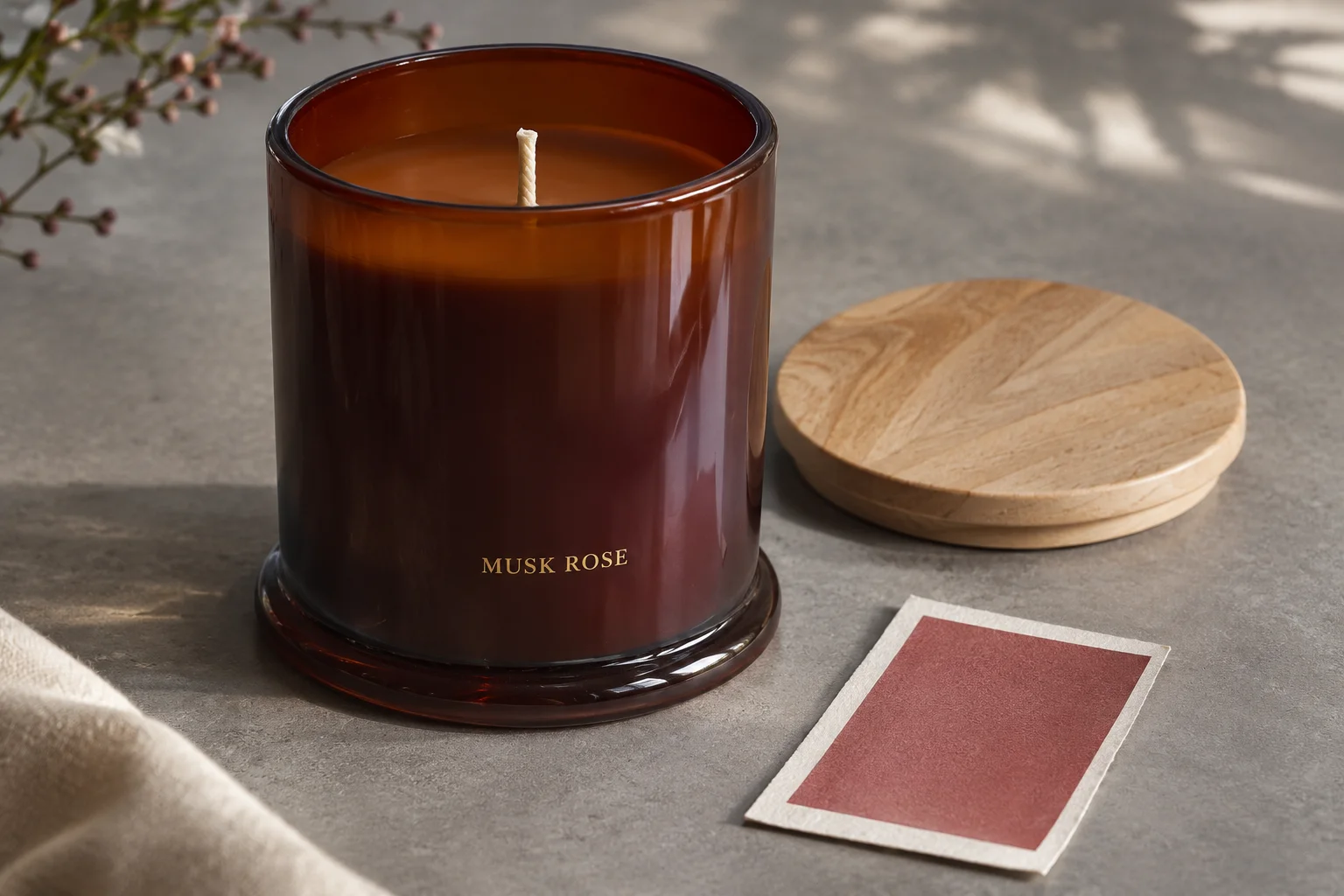
An editorial detail view. Confirm lid material and finish in the selected product specification.
4. Assess coating, frosting and decoration carefully
Ask whether the color comes from the vessel material, a coating or another finish. That distinction can affect appearance and the available decoration processes.
Check the rim, base and areas where the lid touches. Look for uneven coverage, scratches and unwanted contrast between components.
For labels, match the material to the surface. Avery's label guide describes differences among paper, clear film and other substrates.2 Your supplier still needs to confirm the selected adhesive and finish for the actual product.
Do not identify a manufacturing technique from a photograph alone. A gold detail might be foil, ink or another decoration method. Ask for the proposed process by name.
5. Review the whole opening experience
Place the finished candle in the proposed retail box. Remove it, take off the lid and replace both. This simple exercise can reveal details that separate component approvals miss.
Check that the insert supports the product without scuffing the finish. Confirm where the lid sits during transport and whether it needs separation from the vessel.
Also examine the underside. Customers may see the base while checking the label or taking the product out of the box. Keep required information readable and tied to the correct SKU.
6. Price the complete configuration
Ask for the base product and each optional change separately. Include the lid, coating, decoration, insert and packaging.
Separate tooling and setup charges from unit costs. Then request carton dimensions and weight for the selected configuration. All Lumelle quotations exclude shipping costs.
If the price exceeds your target, simplify the element with the least customer value. Removing a redundant decorative process may be better than reducing a functional packing component.
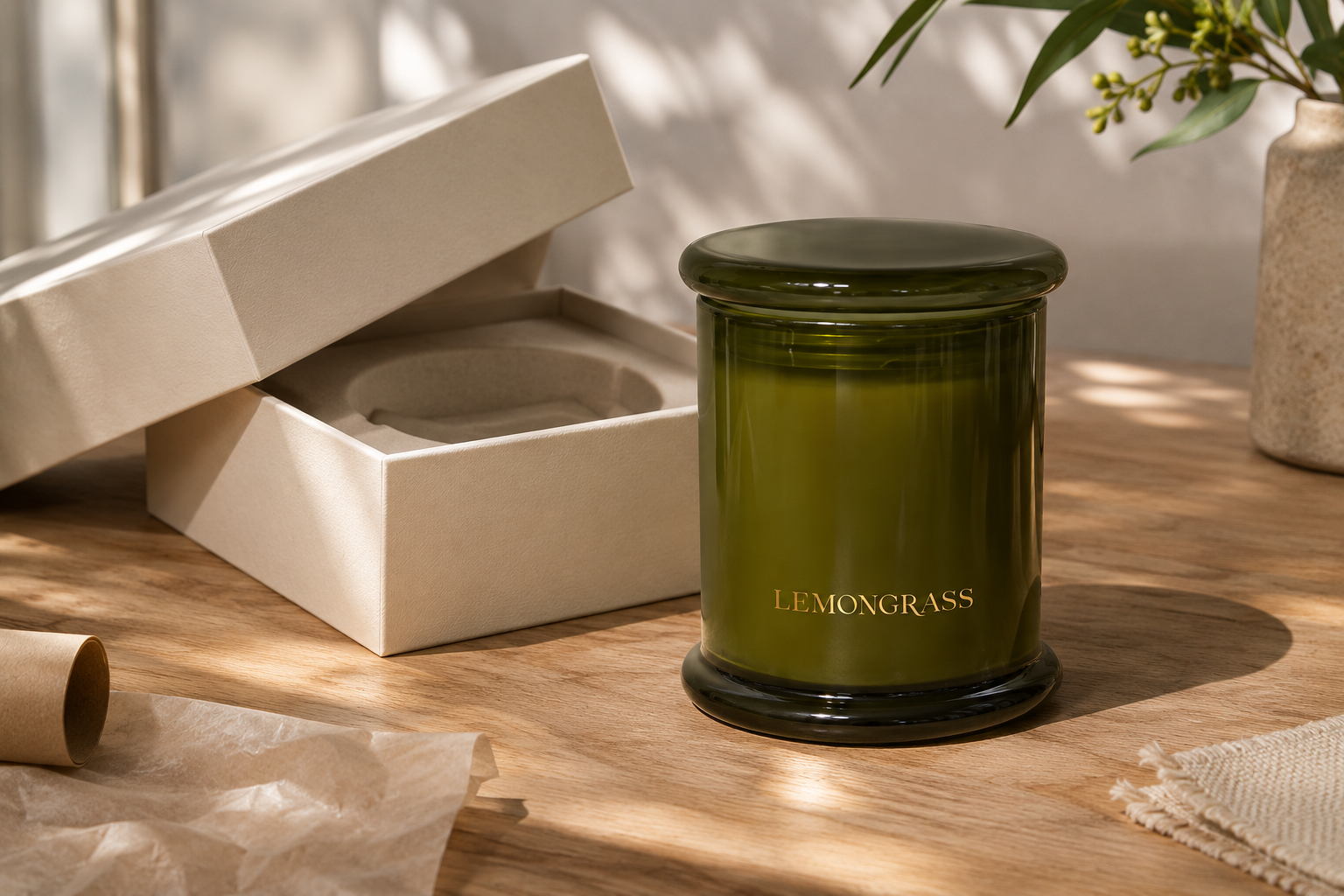
Packaging concept for approval discussion, not a promise that this box is included with the catalog product.
7. Record tolerances and repeat-order details
Keep an approved reference sample and a written description of your candle lids and finishes. Record color and fit. For naturally variable materials, agree the acceptable range using representative examples.
Record the artwork version, decoration location and packaging specification. Ask how the supplier will notify you of changes to materials or production methods.
Our custom and private label service can help review the available combinations. The final choice should support both the collection's appearance and reliable replenishment.
Frequently asked questions
Can any lid fit a candle jar of the same width?
No. Rim geometry, tolerances and any liner matter. Approve the lid and vessel together rather than relying on one nominal measurement.
Are wooden lids always the best choice for natural-looking collections?
Not necessarily. Compare the wood finish with the vessel, label and packaging. Material choice should serve the whole design.
Can I extinguish a candle with its lid?
Only if the product's instructions explicitly permit that use. Do not assume an ordinary decorative cover is designed for extinguishing.
What should a finish sample approval include?
Review color, surface quality, decoration, fit, handling and the packed product. Keep an approved sample and written specification for reorders.
Refine your candle's finishing details
Send Lumelle your preferred vessel and lid references. Include the desired finish, branding, quantity per design and packaging. Our team will review feasibility and the applicable MOQ basis.
References
- National Candle Association. Candle Safety Tips. ↩
- Avery. How to Choose the Right Label Material. ↩