Glass vs. Ceramic Candle Vessels: Which Is Better for Your Brand?
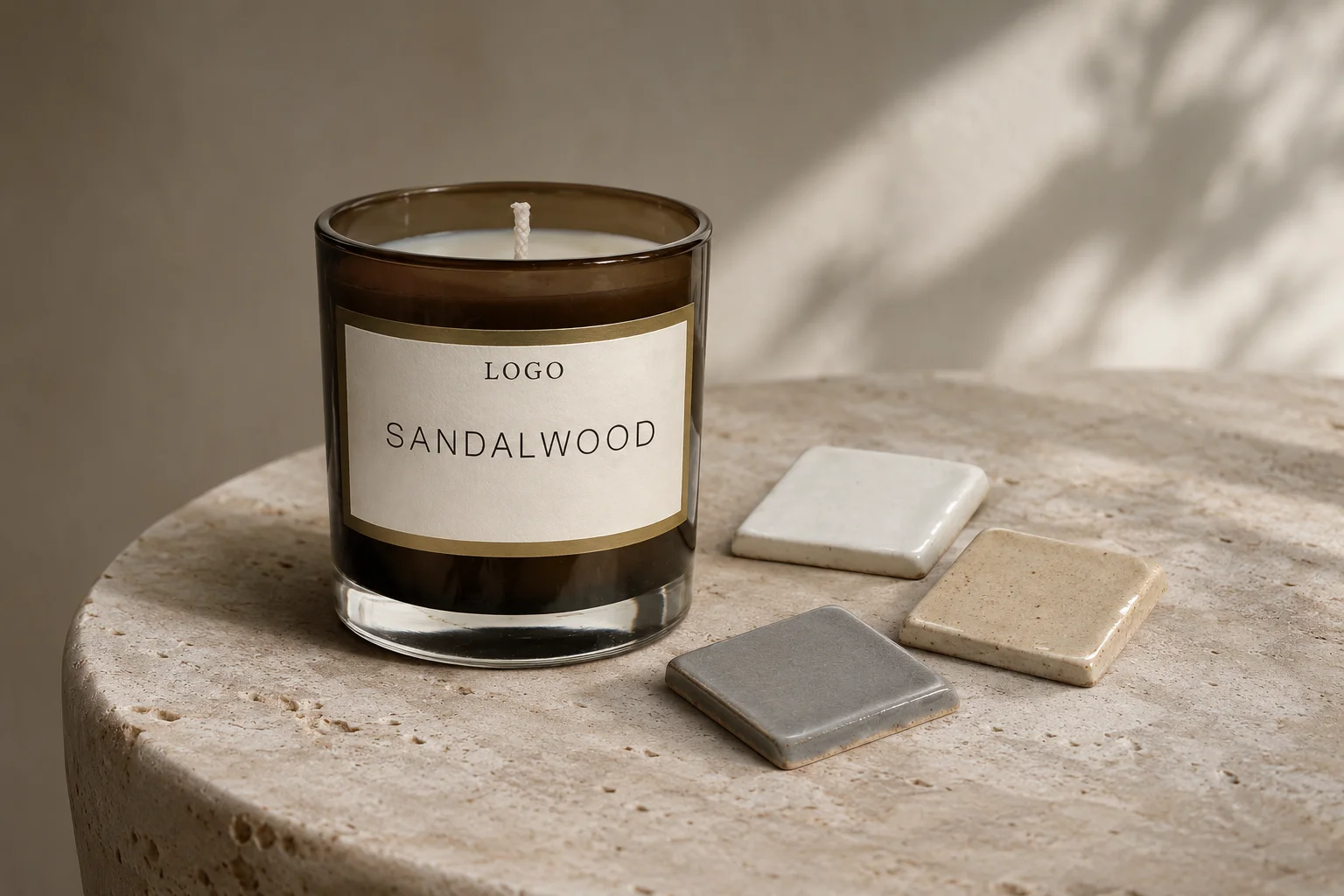
Comparing glass vs ceramic candle vessels starts with your brand's priorities. Glass can reveal the wax and create reflections. Ceramic can provide an opaque, tactile surface. Either material needs a suitable finished design and testing.
Do not choose on material name alone. Review appearance, decoration, production consistency and the complete packed cost. This guide helps buyers turn a visual preference into a useful container brief.
1. Glass vs ceramic candle vessels: compare the visual effect
Transparent glass makes the filling visible. Colored or frosted glass can change that effect, so ask for the exact finish you intend to order.
Ceramic offers a different surface language, from smooth glaze to textured finishes. However, a photograph may hide variations in glaze, rim shape or color. Review physical samples before making a consistency claim.
| Priority | Glass considerations | Ceramic considerations |
|---|---|---|
| Visible filling | Clear glass shows wax and interior details | Opaque walls conceal the side of the filling |
| Brand appearance | Transparency, color, frosting or decoration | Glaze, texture, shape and decoration |
| Consistency | Check color, seams, base and finish | Check dimensions, glaze and accepted variation |
| Packing | Protect edges and prevent contact damage | Protect edges and evaluate the actual shape |
| Development | Existing shapes may simplify selection | Existing or custom shapes require confirmation |
These are comparison points, not a promise that every finish is available for every product.
2. Review suitability for candle use
A container's appearance does not establish its suitability for a burning candle. CandleScience explicitly distinguishes candle containers from jars that may not withstand the intended use.1
Ask for available information relevant to the chosen vessel and finished candle. Do not replace a tested vessel with a similar-looking decorative pot without reviewing the new specification.
For ceramic, clarify the body, glaze and any surface treatment. For glass, clarify the glass and finish specification. In both cases, request the relevant finished-product evaluation and care instructions.
Changing a vessel can also require changes to the wick or filling. Keep those decisions within the development and approval process rather than treating the container as an interchangeable shell.
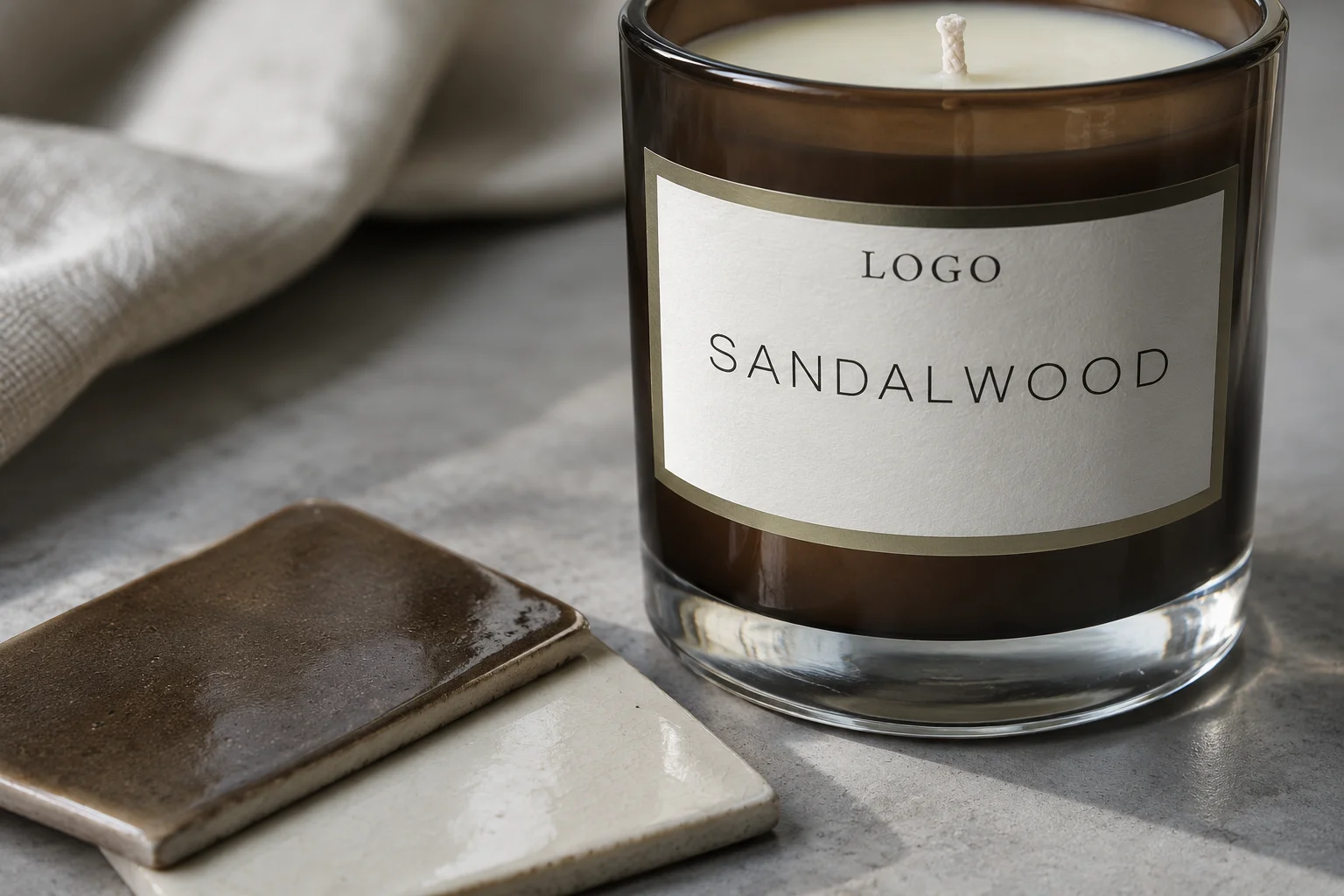
Material-review scene using a catalog candle. Ceramic swatches are comparison props, not advertised Lumelle candle models.
3. Compare weight and handling with samples
Neither material is always heavier. Wall thickness, dimensions and construction influence the result. Weigh the selected samples and request the final packed weight.
Also test how the customer removes the candle from its box. Review grip, base stability and the presence of any lid. A visually distinctive shape may require a more complex insert.
For retail shelves, compare the footprint as well as the height. For gift programmes, check whether the product fits the intended shipping package and handling process.
4. Check decoration on the actual surface
Labels, direct printing and metallic details behave differently across finishes. Ask which processes suit the exact vessel rather than requesting a generic menu of decoration options.
Smooth surfaces may offer different options from textured or strongly curved areas. Glaze color, glass tint and coating can also affect how artwork appears.
Use a decorated sample to approve position, color and legibility. For adhesive labels, confirm the substrate and adhesive suitability. Avery's material guide illustrates how label materials differ in appearance and resistance.2
Our private label service can help frame the decoration discussion. Availability and feasibility require confirmation for each selected design.
5. Compare complete cost, not vessel cost alone
Ask for the finished candle and packed configuration. Separate tooling, sampling and setup charges from recurring unit costs.
Include the lid, decoration, insert and outer packing. Then review freight using the actual carton dimensions and weight. All Lumelle quotations exclude shipping costs.
A lower vessel price can lose its advantage if it needs more protection or creates an oversized retail box. Conversely, a higher vessel cost may support a useful premium role if the customer values the design.
6. Agree the production acceptance range
Create a short sample checklist covering rim, base, dimensions, finish, decoration and lid fit. Identify acceptable variation separately from defects.
For a custom shape, clarify tooling ownership, storage, maintenance and permitted use in writing. Do not assume paying a tooling charge establishes exclusive rights.
Also confirm whether a future material or process change needs your approval. A reliable repeat order depends on retaining the approved specification and a reference sample.
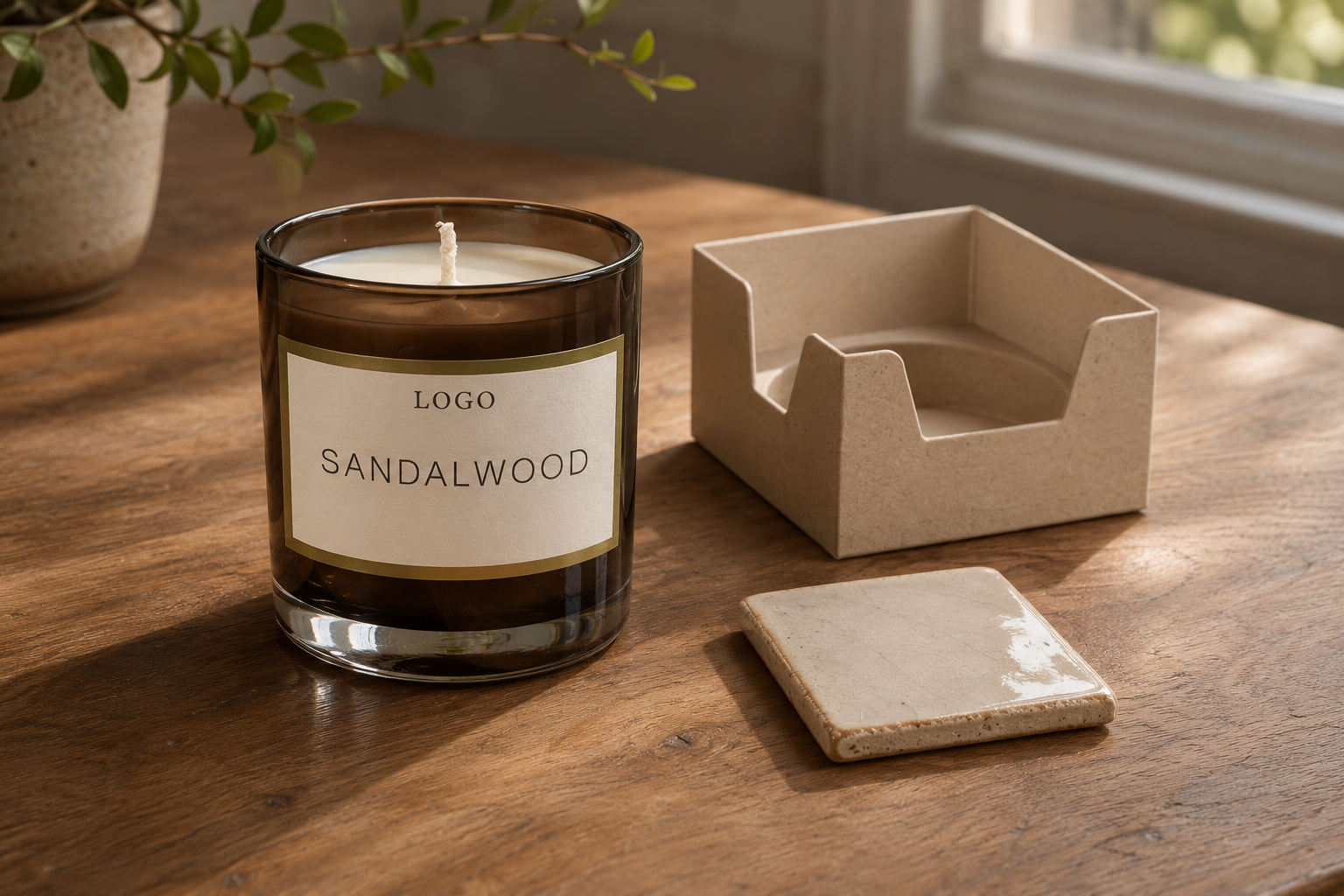
Evaluate the container and packing together. The illustrated packaging is a development concept.
7. Make your glass vs ceramic candle vessels decision
Choose glass when its transparency, reflections or available finishes support your visual direction. Consider ceramic when its surface and form serve a clear design purpose and the project supports the required development.
For either material, begin with available designs before commissioning a new shape. Review the current scented candle catalog and ask our team about any additional material requirements. Do not assume every material in this comparison is a stocked model.
Frequently asked questions
Is ceramic safer than glass for candles?
Material alone does not establish safety. The specific vessel and complete candle need suitable evaluation for their intended use.
Are ceramic vessels always more expensive?
No universal rule applies. Compare the selected shape, finish, quantity, decoration, packing and any development charges.
Can I use a decorative ceramic cup as a candle vessel?
Do not assume it is suitable. Ask for appropriate information and finished-candle testing before using a container for a candle product.
Which material is better for a first private label range?
Start with a suitable existing design that fits your brand and budget. Confirm its specification and available customization before developing a new shape.
Review your vessel brief with Lumelle
Send us your preferred material, product references and quantity. Include the fragrance, decoration, lid and packaging requirements. Our team can review feasibility and the applicable MOQ basis.
References
- CandleScience. Candle Containers. Container selection and suitability considerations. ↩
- Avery. How to Choose the Right Label Material. ↩